Is there a river cruise available on Lake Lucerne?
No, there is no river cruise on Lake Lucerne itself, but the lake's cruise scene is far better than what a river cruise would offer. Here is what to book instead.
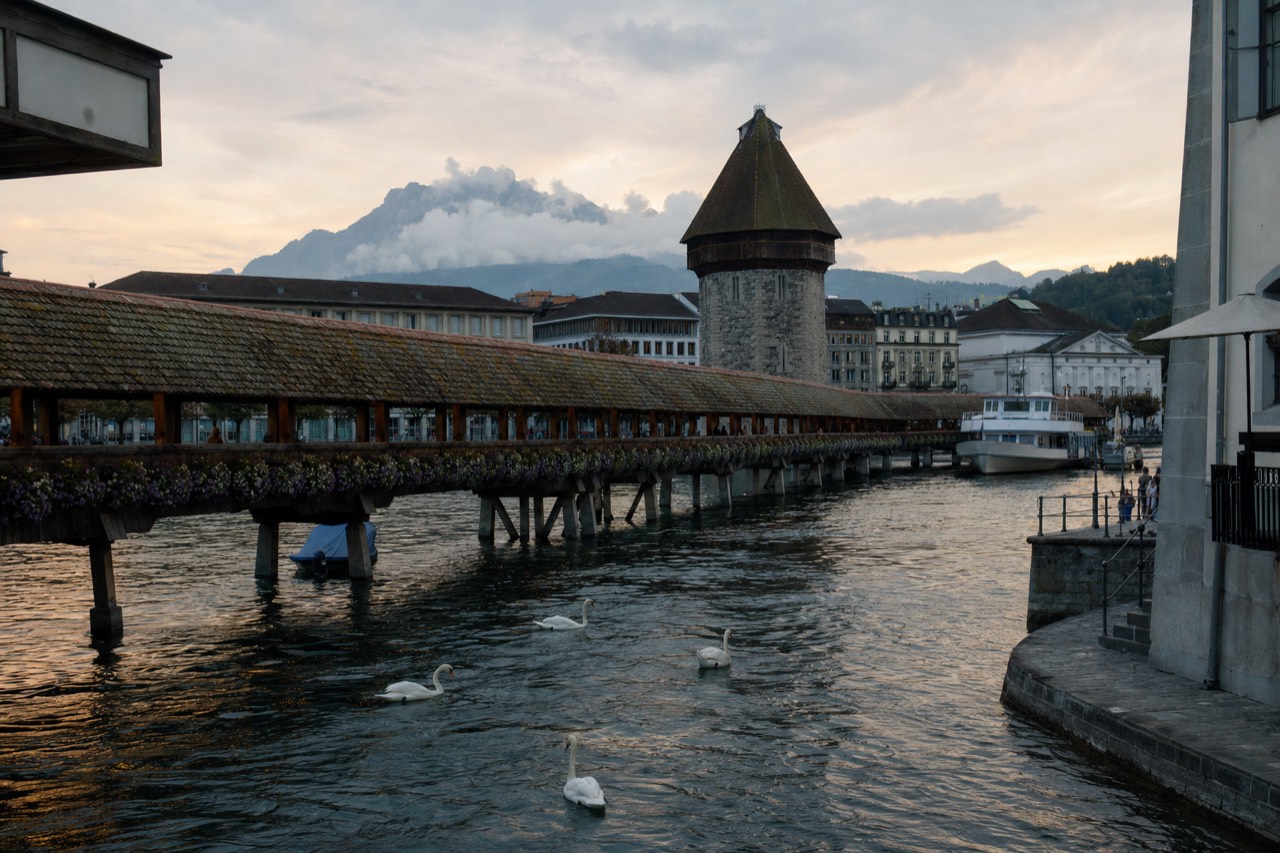
No, there is no river cruise available on Lake Lucerne, because Lake Lucerne is a lake rather than a river. What you can book instead is a fleet of scheduled and tour cruises run by the Lake Lucerne Navigation Company (SGV), including one-hour sightseeing loops, catamaran and panorama-yacht cruises, paddle steamer round trips, and mountain-combo packages that tie the boat to Mt. Pilatus or Mt. Rigi. If you were picturing a slow river-style journey past villages and cliffs, the lake's long fjord-like arms deliver exactly that scenery, just on still water.
That distinction trips up a lot of travelers, and it is worth unpacking properly. Search interest in "river cruise Lake Lucerne" is real, and it usually comes from two directions: people who have heard about Rhine river cruises in Basel and assume Lucerne offers something similar, and people who do not realize that the "lake" part of the name is doing all the work. The Reuss river does flow through the city of Lucerne, under the Chapel Bridge, and out into the lake, but no cruise product operates on that short urban stretch. Everything marketed as a cruise here is on the lake itself.
The good news is that what the lake offers is, for most travelers, better than a river cruise anyway. Rivers are linear; Lake Lucerne is a tangle. With a surface area of about 114 km² and a maximum depth of 214 m, the lake folds into multiple arms that cut between sheer cliffs, so a round trip feels less like a commute and more like a voyage through a flooded mountain valley. You get the slow-passing-villages feel of a river cruise with the panorama of an alpine lake.
What is the difference between a lake cruise and a river cruise?
A river cruise travels continuously along a flowing river, moving between two points and passing through changing scenery, towns, and locks along the way. A lake cruise, by contrast, stays on still water, crossing or looping across the lake and typically returning to the same port where it began. On a river, the boat is always going somewhere downstream or upstream, and the scenery changes once and never repeats. On Lake Lucerne, a cruise can trace a circle, double back, or simply drift while the mountains rotate around you, which makes it a scenic attraction in its own right rather than transportation with a view.
This matters for planning because it changes what you are buying. A river cruise is essentially transportation with a view. A lake cruise is more like a scenic attraction in itself, closer in spirit to a sightseeing flight or a scenic train ride than to a ferry service. The one-hour discovery cruise from Lucerne, for example, is a loop: you board, you circle the bay past the Chapel Bridge and the Jesuit Church, the pilot points out the cliffs and the Pilatus massif, and you are back within the hour. Nothing about that is going anywhere. It is purely about being on the water.
The lake does have one river-cruise-like product, though, and it is worth naming for anyone chasing that slow-journey feeling. The Grand Lake Cruise runs from Lucerne to Flüelen and back, roughly five and a half hours round trip, tracing the lake's longest arm past Weggis, Vitznau, Brunnen and the Axen cliffs. A single one-way scheduled sailing from Lucerne to Flüelen takes about 2 hours 40 minutes. That is the closest thing to a river cruise experience on this water: long, unhurried, and dominated by shoreline scenery that genuinely does change as you go. If your heart was set on a "river cruise on Lake Lucerne," book the Flüelen run and you will not feel shortchanged.
Which Lake Lucerne cruise should you book if you wanted a river cruise?
Book the Mt. Pilatus combo cruise if you want a full-day journey, since it pairs a Lake Lucerne boat ride with the world's steepest cogwheel railway and an aerial cableway for a complete day trip. If you prefer a shorter scenic loop instead, choose the one-hour panorama-yacht or catamaran cruise, both offering quick views of the lake. The Pilatus package is the closest structural match to a river cruise day, because it stitches a boat, a mountain railway, a summit stop and a second boat leg into one continuous itinerary with chapters, rather than a simple out-and-back loop on open water.
Here is the honest comparison, in the order most river-cruise seekers end up preferring:
| Cruise | Style | Duration | Best for |
|---|---|---|---|
| Mt. Pilatus combo (cable car, cogwheel train, lake cruise) | Full-day journey with two boat legs | Varies by option | Travelers who wanted a river-style full-day voyage |
| Panorama-yacht Saphir scenic cruise | Enclosed glass-deck loop | 1 hour | Bad-weather days, first-time visitors |
| Round-trip catamaran cruise | Open-air loop | 1 hour | Sunny afternoons, photography |
| Grand Lake Cruise to Flüelen (scheduled) | Long arm-to-arm sailing | About 5 hours 30 minutes round trip | The slow-journey purists |
| Steamboat experience with 5-course menu | Historic vessel, dining | 5 hours | Special occasions |
The Pilatus combo deserves the top slot for a specific reason. River cruises sell you a narrative: embark, glide, stop somewhere interesting, continue. The Pilatus day has exactly that shape. You leave Lucerne by boat, transfer at Alpnachstad to the world's steepest cogwheel railway, cross the summit, descend by cable car, and sail back. It is a journey with chapters, not a loop. The listing currently shows a 4.7 rating across 2,734 reviews (checked September 2026), from around $202 per person, and it is flagged as likely to sell out in peak season, so booking ahead is genuinely advised rather than a marketing line.
Can you take a cruise on the Reuss river in Lucerne?
No, there is no commercial cruise on the Reuss river in Lucerne. The river is only a short stretch of navigable city water between the lake and its mouth, and no operator runs tours on it. However, boat cruises depart from Lucerne on the lake itself, so you can still get out on the water nearby. The Reuss is beautiful, and walking its banks under the Chapel Bridge is one of the city's best free experiences, but it is a stroll, not a cruise, and nothing about its length or character would support a tour product even if an operator wanted one.
This is the point where expectations need calibrating. When people imagine a "river cruise in Lucerne," they are often imagining a small boat drifting under the Chapel Bridge, past the painted gables, maybe out to the lake. That product does not exist, partly because the geometry does not allow it and partly because the lake cruises already cover the waterfront (literally) better. The one-hour discovery cruise from Lucerne passes the Chapel Bridge and the old town from the water side, which delivers the view people actually want from a hypothetical river cruise, then continues out into the open lake where a river boat could never take you.
If you are set on being on moving water in Switzerland more generally, the Rhine river cruises out of Basel are a different region and a different trip. From Lucerne, the answer is not to chase the river but to use the lake as your waterway. The scheduled SGV services function like a river cruise network in miniature: regular departures, fixed ports, and the option to hop off in Weggis or Vitznau and continue later. A one-way scheduled sailing from Lucerne to Weggis takes roughly 40 to 50 minutes, and Lucerne to Vitznau about an hour, which makes a "cruise and stopover" day entirely practical on ordinary scheduled boats.
How much does a Lake Lucerne cruise cost?
Scheduled one-way boat tickets start around CHF 23 (Lucerne to Weggis, 2nd class full fare), a 2nd-class day pass for the whole lake is CHF 86, and tour cruises range from about $31 for a one-hour discovery cruise to around $202 for the full Pilatus combo (checked September 2026). If you hold a Swiss Travel Pass, scheduled SGV boats are 100% free, and the Swiss Half-Fare Card cuts 50% off, which changes the math for pass holders completely.
That price spread is worth understanding because it is the biggest planning decision you will make. The scheduled network is astonishingly good value if you have a pass: five historic paddle steamers and fourteen motor vessels run year-round (with a reduced winter schedule), and pass holders ride them like buses. The tour products, the ones with a guide, a guaranteed seat, or a mountain railway bundled in, cost more but remove the timetable work.
A few honest notes on the numbers:
- The CHF 23 Lucerne-Weggis fare is a one-way 2nd class scheduled ticket at full fare, not a tour.
- The CHF 86 day pass covers the whole lake network for a day, which makes multi-stop itineraries (Lucerne, Weggis, Vitznau, return) far cheaper than buying legs separately.
- Tell-Pass and Lucerne Travel Pass holders also ride scheduled SGV services; check your pass category before assuming.
- Tour prices move with season. The Pilatus combo listing notes seasonal variations for 2026, so treat any quoted figure as a floor, not a promise.
For the tours themselves, prices live on the operator's live listing and shift with demand. The one-hour discovery cruise is the budget entry point, from around $31 (checked September 2026). The steamboat dinner experience with a five-course menu, currently showing a 5.0 rating from a small number of reviews, runs around $682 and is a splurge rather than a transport decision. Where a figure is not firm here, it is on the listing, and that is where you should check it.
What about the paddle steamers, are they like river cruise boats?
No, the paddle steamers are a different experience from modern river cruise boats, and in many ways they are better. Five historic vessels dating from 1901 to 1928 still run on Lake Lucerne: the Uri (1901), Unterwalden (1902), Schiller (1906), Gallia (1913), and Stadt Luzern (1928). Riding one of these restored steamers feels like stepping back into a different era of lake travel. River cruise vessels are modern and interchangeable; these are working museum pieces with polished teak decks and a clanking paddle mechanism, still doing the same runs they have done for over a century.
This is the lake's trump card and the reason the "no river cruise" answer should not disappoint anyone. A Rhine river boat is comfortable but anonymous. Boarding the Gallia or the Schiller means polished teak decks, a clanking paddle mechanism you can sometimes glimpse, and a ship that has been doing this run for over a century. The steamers operate primarily in summer; for 2026 the Stadt Luzern is scheduled through 18 October, and the Uri runs special winter-themed trips in November and December, so a steamer is not guaranteed on any given day, but in high summer several are on the timetable simultaneously.
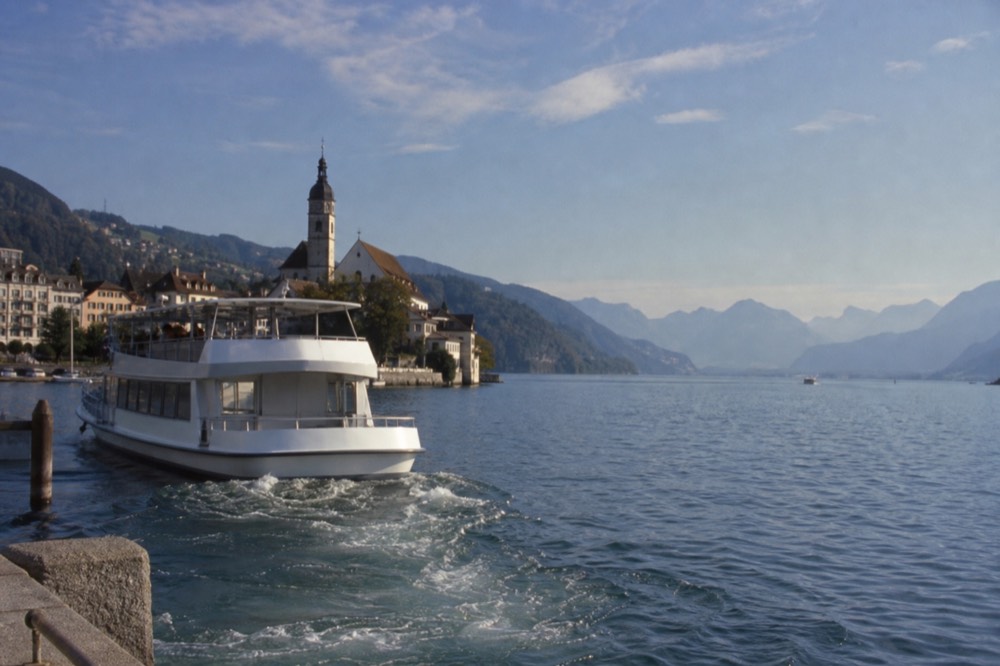
If you want the steamer plus a meal, the exclusive steamboat experience with a five-course menu runs about five hours on the fleet's fastest steamship, operating daily except Mondays with an evening departure on Wednesdays. It is the most river-cruise-like product on the lake in spirit: long, slow, dine-as-you-drift. It is also the most expensive, and with only a handful of reviews so far you are buying the experience rather than crowd validation.
Is a Lake Lucerne cruise worth it if I can't get a river cruise?
Yes, and for most travelers the lake cruise is the better product: the scenery is more dramatic than any lowland river, the historic fleet has no river equivalent, and the network of scheduled boats lets you build your own multi-stop itinerary for the price of a day pass. The only thing a river cruise offers that the lake cannot is the point-to-point "arrive somewhere new each evening" structure, and if that is what you want, you want a multi-day Rhine cruise, not a day trip from Lucerne.
It helps to compare like with like. A typical European river cruise day: flat or rolling banks, locks, vineyards, a town stop. A Lake Lucerne cruise day: cliffs rising straight from the water, a 214 m deep lakebed beneath you, five working century-old steamers, and optional mountain railways at the ports. On pure scenery per hour, the lake wins comfortably. The trade is that you stay based in Lucerne rather than waking up in a new city, which for a 3 to 5 day Lucerne trip is usually exactly what you want anyway.
The practical way to build a river-cruise-style day without a river cruise:
- Start early with a scheduled boat from Lucerne toward Vitznau (about an hour).
- Hop off and ride the Rigi railway, or stay aboard toward Flüelen if you want the long fjord arm.
- Return on a different vessel, ideally a steamer if the timetable allows.
- Total cost with a day pass: CHF 86 at full fare, less with a pass, plus any mountain railway.
For travelers who would rather someone else handle the logistics, the guided Pilatus combo does the same thing with a cable car and the cogwheel railway swapped in, and it is the tour we point river-cruise seekers toward most often. You can read more in our piece on whether the cruise is worth it, which breaks down the value question by traveler type.
When is the best time of year for a Lake Lucerne cruise?
The best time for a Lake Lucerne cruise is May, June, September or early October, when full timetables and historic steamers are running but crowds are thinner than in peak summer. That said, summer remains the classic season, and scheduled boats operate year-round, just on a reduced winter schedule. The steamer fleet is the seasonal variable: it runs primarily in summer, with 2026 sailings of the Stadt Luzern through 18 October and special winter steam trips on the Uri in November and December, so shoulder months are the sweet spot for most visitors.
Weather deserves a specific word here because it interacts with the refund policy in a way that surprises people. SGV's terms are explicit that poor or inclement weather is not, by itself, a valid reason for a customer-requested cancellation or refund, while the operator may reschedule or cancel in extreme meteorological conditions. In practice: rain will not stop your cruise, and it will not get your money back either, so if you are booking a fixed-date tour, build flexibility into your itinerary rather than hoping for a weather loophole. The one-hour discovery cruise operates in all weather, which makes it the reliable fallback; the catamaran is the one to save for a clear day.
For month-by-month planning, including shoulder-season trade-offs, see our guide to the best month to visit Lucerne. If you are already committed to a specific week, the practical advice is simpler: book the open-air catamaran or a steamer for your best-forecast day, keep the panorama yacht (a glass-deck vessel, comfortable in rain) as the backup, and treat the scheduled network as your free-form filler in between.
Common questions about river cruises on Lake Lucerne
The short answer to every question in this section is that no river cruise exists on Lake Lucerne, but the lake's own cruise network, from one-hour loops to the Flüelen round trip, covers every experience a river cruise would have given you. The details below handle the specifics: the Reuss river, pass coverage, the steamers, and the weather refund policy.
Is there a river cruise available on Lake Lucerne?
No. Lake Lucerne is a lake, and no operator runs cruises on the short Reuss river through the city. What exists instead is a large scheduled and tour cruise network on the lake itself, run by the Lake Lucerne Navigation Company (SGV), ranging from one-hour loops to a roughly five-and-a-half-hour Grand Lake Cruise round trip.
Can you boat on the Reuss river in Lucerne?
Not commercially. The Reuss flows through the old town under the Chapel Bridge and into the lake, but there is no cruise product on it. The lake cruises pass the Chapel Bridge and old town from the water, which covers the view most people want.
What is the closest thing to a river cruise on Lake Lucerne?
The Grand Lake Cruise from Lucerne to Flüelen and back, about 5 hours 30 minutes round trip, with a one-way scheduled sailing taking roughly 2 hours 40 minutes. It is the longest, most journey-like cruise on the lake. The Mt. Pilatus combo tour is the closest full-day equivalent with a narrative structure.
Does the Swiss Travel Pass cover Lake Lucerne cruises?
Yes. The Swiss Travel Pass and GA Travelcard give 100% free travel on scheduled SGV boats, and the Swiss Half-Fare Card gives a 50% discount. Tell-Pass and Lucerne Travel Pass are also valid on scheduled services. Tour products with guides or mountain railways bundled in are separate.
Do the historic paddle steamers run all year?
Primarily in summer. The five historic steamers (Uri 1901, Unterwalden 1902, Schiller 1906, Gallia 1913, Stadt Luzern 1928) run mainly in the warmer months; for 2026 the Stadt Luzern is scheduled through 18 October, and the Uri runs special winter-themed trips in November and December. Scheduled motor vessels run year-round on a reduced winter schedule.
Can I get a refund if the weather is bad?
Not for weather alone. SGV's terms state that poor or inclement weather is not, by itself, a valid reason for a customer-requested cancellation or refund, though the operator may reschedule or cancel sailings in extreme meteorological conditions. Book flexible dates where possible.
The bottom line: if you came here searching for a river cruise, what you actually want is a long, scenic, unhurried day on alpine water, and Lake Lucerne delivers that better than most rivers do. The team at Lake Lucerne Boat Cruises rates the Flüelen run and the Pilatus combo as the two experiences that most reliably scratch the river-cruise itch. For more on what else the region does well, see our guide to what not to miss in Lucerne.